
Welcome to the Simmel lab - Physics of Synthetic Biological Systems
Our goal is the realization of self-organizing molecular and cellular systems that are able to respond to their environment, compute, move, take action. On the long term, we envision autonomous systems that are reconfigurable, that can evolve and develop.

DNA origami super-assemblies

DNA-based robotics
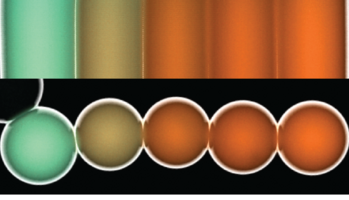
Positional information in synthetic cell assemblies

DNA-only membranes generate cell-sized compartments. Biological compartmentalization relies on dynamic membrane-like assemblies that create and control localized chemical environments across multiple length scales. While DNA nanotechnology has enabled the construction of highly ordered nanoscale cages and polyhedral objects, the realization of soft, membrane-like compartments at cellular length scales has remained challenging. In this work, we introduce a lipid-inspired DNA origami building block that self-assembles into extended monolayer membranes capable of forming vesicles and tubular containers with diameters ranging from the nanoscale to several micrometres. By combining programmable DNA origami design with membrane-inspired assembly principles, cryo-electron tomography, fluorescence microscopy and computational modelling, we demonstrate the formation of dynamic, cell-scale DNA compartments with programmable structural and mechanical properties. On the left you can see a cut through several small Dipid containers made with cryoEM tomography (in collaboration with B. Beinsteiner and M. Jasnin).
Karfusehr, C., Eder, M., Yang, H. Y., Beinsteiner, B., Jasnin, M. & Simmel, F. C. Self-assembled cell-scale containers made from DNA origami membranes. Nature Materials 25, 502–510 (2026).

Single molecule strand displacement: Toehold-mediated strand displacement is at the core of many of the systems developed in dynamic DNA and RNA nanotechnology. The details of this process, in which several nucleic acid molecules with the same or similar sequence compete for binding to a complementary strand, are not fully understood yet. In this work, in collaboration with the groups of Matthias Rief and Petr Šulc we explore the dynamics of strand displacement processes at the single-molecule level using single-molecule force spectroscopy with a optical trap supported by state-of-the-art coarse-grained simulations. Our results reveal the importance of sequence effects for the TMSD process, which is significant for many applications in nucleic acid nanotechnology and synthetic biology.
Walbrun, A., Wang, T., Matthies, M., Šulc, P., Simmel, F. C. & Rief, M. Single-molecule force spectroscopy of toehold-mediated strand displacement. Nat. Commun. 15, 7564 (2024).

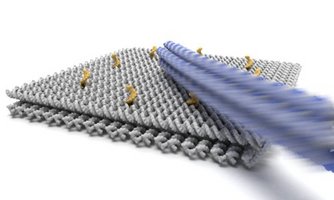
A nanorobotic wind up toy: Using electrical actuation of a DNA-based nanorobotic arm attached to a base plate via two single-stranded DNA connectors, we show that winding of these strands around each other effectively constitutes a nanoscale molecular torsion spring. Using single-molecule fluorescence tracking, we thoroughly characterize the balance between electrical and mechanical torque for a range of different connectors, and show that such torsion springs can be used to store and also release mechanical energy.
M. Vogt, M. Langecker, M. Gouder, E. Kopperger, F. Rothfischer, F. C. Simmel#, J. List#, Storage of mechanical energy in DNA nanorobotics using molecular torsion springs, Nature Physics 1–11 (2023). doi:10.1038/s41567-023-01938-3

A Brownian ratchet rotor made from DNA origami: In collaboration with the Dietz group, the first Brownian ratchet based on a DNA origami structure was realized, which displays directional rotational movement due to its intrinsic asymmetry when driven out of thermal equilibrium. The structure consists of an arm sitting on a pedestal with three obstacles, leading to six preferred orientations of the arm. When the structure is actuated with an alternating linear electric field (that is not rotating!), the arm rotates directionally. The behavior of the arm is consistent with a "flashing Brownian ratchet" model. Theoretical support for the investigation of the system was provided by the Golestanian group (MPI DS Göttingen).
A.-K. Pumm, W. Engelen, E. Kopperger, J. Isensee, M. Vogt, V. Kozina, M. Kube, M. N. Honemann, E. Bertosin, M. Langecker, R. Golestanian#, F. C. Simmel#, H. Dietz#, A DNA origami rotary ratchet motor, Nature 607, 492–498 (2022). https://doi.org/10.1038/s41586-022-04910-y

Conditional guide RNAs for Cas12a in mammalian cells: Conditional guide RNAs (gRNAs) allow to make CRISPR-based processes such as gene editing or gene regulation dependent on cellular or environmental signals. We have developed a novel strategy to switch gRNAs for the CRISPR-associated protein Cas12a based on various molecular inputs - microRNAs, short hairpin RNAs, metabolites (via a ribozyme) or other RNA inputs (via a strand displacement process) in mammalian cells. Importantly, in this approach the guide RNAs are produced via a Pol II-promoter and later processed to become a fully functional gRNA. This also allows to encode a full gRNA circuit - including the mRNA encoding the Cas12a - on a single transcript.
L. Oesinghaus and F.C. Simmel, Controlling Gene Expression in Mammalian Cells Using Multiplexed Conditional Guide RNAs for Cas12a, Angew. Chem. Int. Ed. (2021). https://doi.org/10.1002/anie.202107258