X-ray crystallography facility
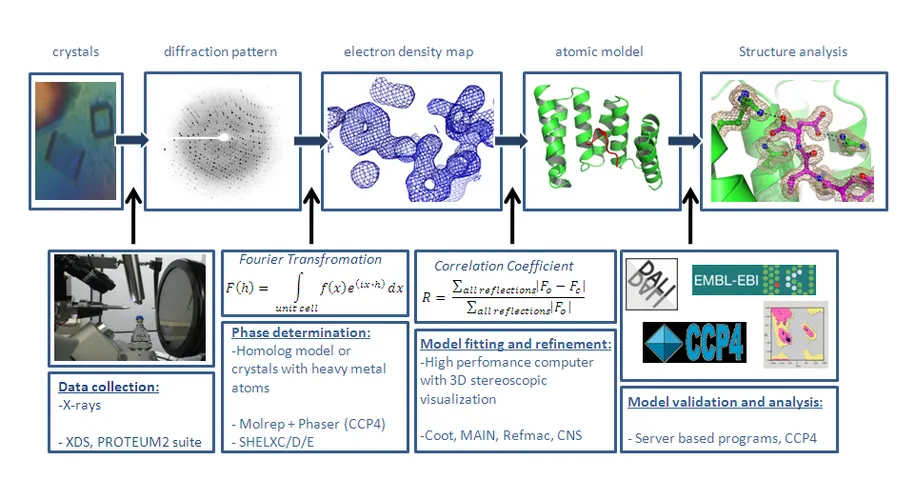
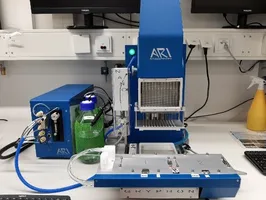
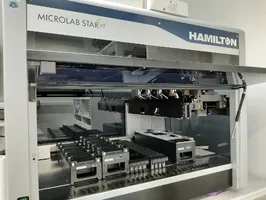
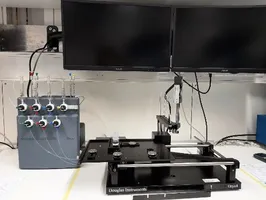
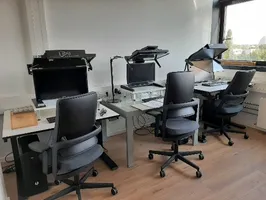
Depending on the amount of purified protein available, up to 3,000 unique crystallization conditions can be screened at once using several high-throughput pipetting robot systems. Initial trials are set up with either the Crystal Gryphon or the Crystal Phoenix robot system (both from Art Robbins Instruments). These precise high-capacity machines allow for a reliable throughput of crystallization screenings in the sitting drop vapor diffusion technique. Drop volumes can be as small as 0.1 µl and the waste by technical limitations is almost negligible. Once initial crystallization parameters have been identified, fine screening is required to optimize crystals with respect to size and diffraction properties. To this end the Hamilton Liquid Handling Workstation is available and an additional Oryx4 Robot system (Douglas instruments) serves for micro- and cross-seeding experiments. Diffraction quality of crystals is routinely assessed at synchrotrons via remote-access. A high-end PC station equipped with a 4K monitor is available to ensure real-time video and data transmission. Structural models are built at our computer center with excellent graphics and stereo monitors.